
When it comes to controlling welding fumes, smoke, and dust, experienced professionals know there’s no substitute for source capture. Downdraft tables pull contaminants away from the work surface immediately, before they reach the operator’s breathing zone, making them one of the most reliable ways to improve air quality and support OSHA compliance in metalworking environments.
Defender Downdraft Tables are trusted by professionals who work in real-world production settings every day. From fabrication shops to manufacturing plants and training facilities, Defender systems are chosen for one simple reason: they work – consistently, efficiently, and without compromise. Each table is manufactured in the USA and engineered for long-term, heavy-duty use.
With sizes ranging from 2×3 to 4×9, Defender portable, industrial, and ducted (remote) downdraft tables are designed to fit the way work actually gets done. Whether you’re welding, grinding, deburring, sanding, or finishing, Defender tables capture fumes and dust at the source while keeping productivity high and workspaces clean.
For professionals who take safety seriously and expect their equipment to hold up shift after shift, Defender isn’t just another option – it’s the gold standard they rely on.

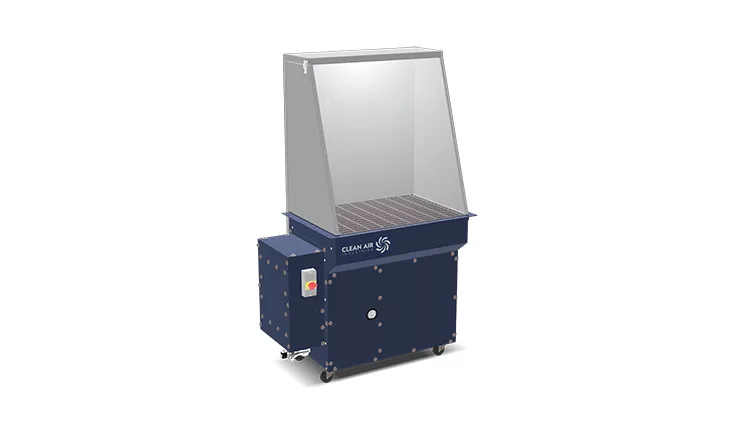
The perfect solution if you’re looking for quick effective source capture of weld fume and grinding dusts. Featuring our standard 2x3 configuration.
Product Details
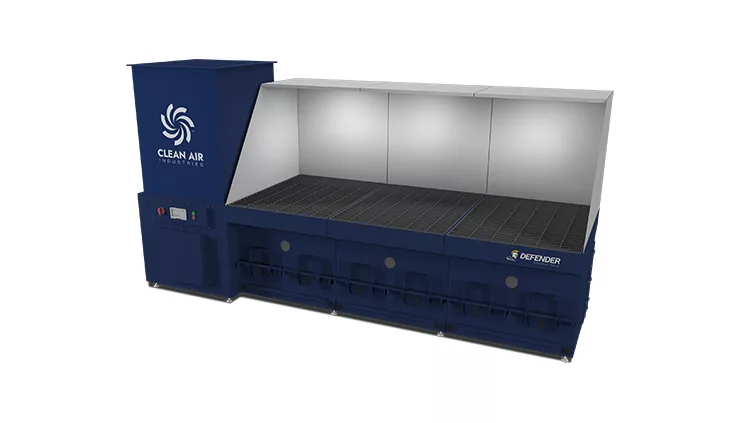
Industrial, modular downdraft tables available in 4x3, 4x6, and 4x9 configurations with best in-class true face velocity and airflow.
Product Details
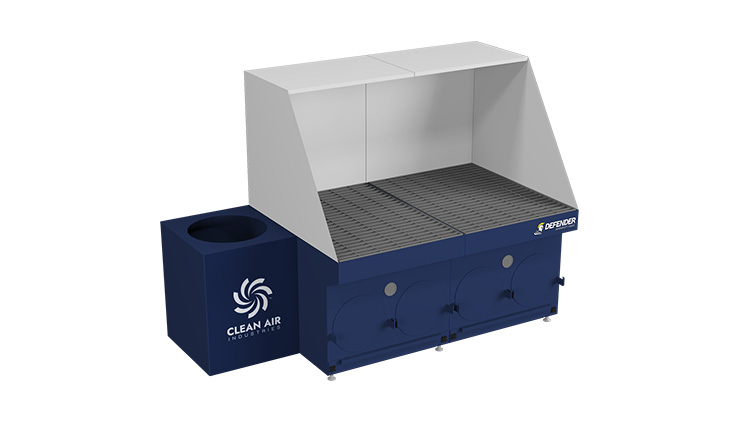
Designed for integration with dust collector systems, providing a cost-effective alternative where multiple downdraft tables are required.
Product DetailsPlease provide the information below, and one of our experts will be in touch very shortly to help with your needs.
A downdraft table functions by drawing air downward through a perforated work surface. As grinding dust, welding fumes, and airborne contaminants are generated during work processes, they are immediately pulled into the table before they can disperse into the surrounding environment.
The contaminated air passes through a built-in filtration system that captures hazardous particles. Depending on the system design, the filtered air is either recirculated back into the workspace or exhausted externally. This process helps maintain cleaner air, improves worker safety, and reduces exposure to potentially harmful substances.
Downdraft tables are ideal for production areas that require a source capture solution.
Downdraft tables are designed for a wide range of tasks that produce airborne contaminants. Common applications include grinding, cutting, welding, sanding, and finishing processes.
However, not all downdraft tables are appropriate for every material — particularly metals or substances that release combustible fumes and/or dust. It’s essential to consult the manufacturer’s specifications to ensure the table is compatible with the intended use and material type.
Downdraft tables are more than just a convenience—they’re a smart safety solution that directly impacts the health of your team and the performance of your operation. Here’s how they make your workspace safer and more efficient:
In short, a downdraft table is a smart investment in safety, compliance, and operational efficiency—protecting both your people and your bottom line.
Yes. Downdraft tables support regulatory compliance by controlling airborne dust, fumes, and particulate matter at the point of generation. By reducing workers’ exposure to hazardous substances, these systems help organizations meet occupational health and safety standards such as those set by OSHA, NIOSH, and other regulatory bodies.
Effective use of downdraft tables contributes to maintaining required air quality levels in the workplace, minimizing legal risk, and supporting a safe working environment.
Regular maintenance is essential to ensure consistent airflow, filtration efficiency, and overall system performance. Key maintenance tasks include:
Adhering to these practices helps extend the life of the equipment and ensures safe, effective operation.