What Is Source Capture? How Welding Fume Extraction Works, What OSHA Requires, and What the Research Shows


Source capture is a method of local exhaust ventilation that removes welding fume and gases at the point where they are generated, before they reach the welder’s breathing zone or spread through the facility. Instead of diluting contaminated air across an entire building, a source capture system pulls fume directly into a hood, nozzle, or extraction gun positioned at the arc, then filters it or exhausts it outdoors.
It is the most targeted engineering control available for welding fume, and it is the approach that occupational health research and OSHA’s regulatory framework both point toward first.
Key Takeaways
- Source capture removes fume at the arc, protecting the welder and everyone else in the shop.
- Welding fume is classified by IARC as a Group 1 human carcinogen, including fume from mild steel.
- A pooled analysis of over 2,000 exposure measurements found 67% lower manganese exposure and 43% lower total particulate exposure when local exhaust ventilation was present.
- OSHA standards 29 CFR 1910.252(c), 1910.134(a)(1), 1910.1026, and 1926.353 all require or prioritize engineering controls such as local exhaust.
- Capture efficiency depends on distance: OSHA’s own table requires four times the airflow at 10–12 inches from the arc as at 4–6 inches.
How Does Source Capture Work?
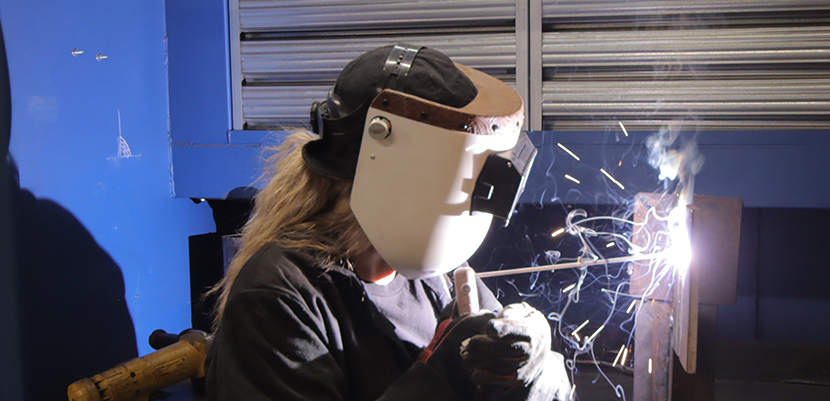
Welding fume forms when metal vaporizes in the arc, then cools and condenses into extremely fine particles. These particles are mostly smaller than one micrometer, small enough to be inhaled deep into the lungs. The heat of the arc drives them upward in a plume, often directly past the welder’s face.
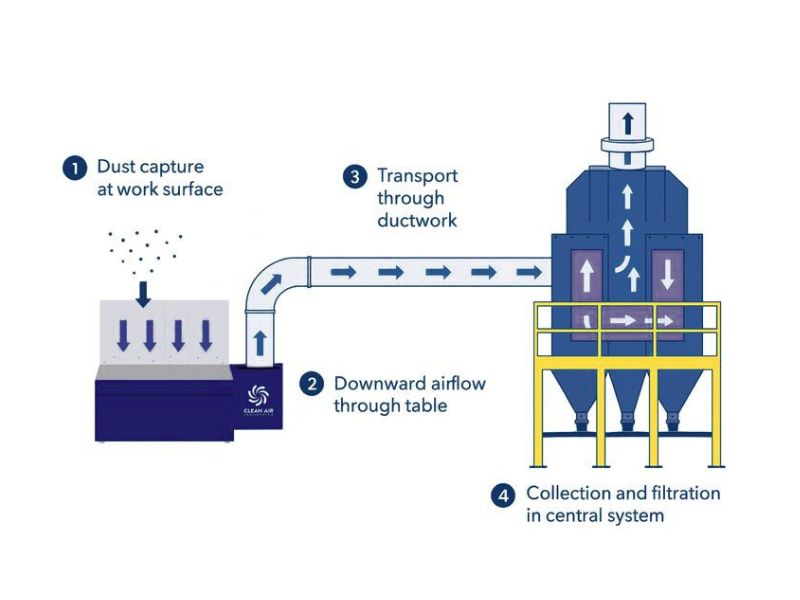
A source capture system interrupts that plume. A fan creates negative pressure at a hood or nozzle, generating an airflow (the capture velocity) strong enough to overcome the plume’s rise and any cross-drafts in the shop. The contaminated air travels through ducting to a filter unit, where particulate is collected, and the air is either exhausted outside or, where appropriate and properly evaluated, returned to the building.
Common Types of Source Capture Equipment
- Fume extraction guns (on-torch extraction): MIG/flux-cored guns with a built-in vacuum nozzle that captures fume within inches of the arc.
- Extraction arms and movable hoods: Articulating arms the welder positions near the work, connected to a portable or central collector.
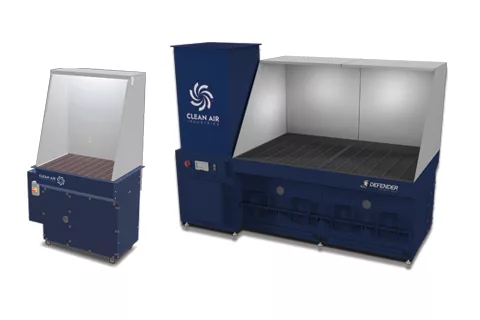
- Downdraft and backdraft tables: Workbenches that draw fume down through a perforated surface or back through a rear plenum, well suited to fixture and small-part welding.
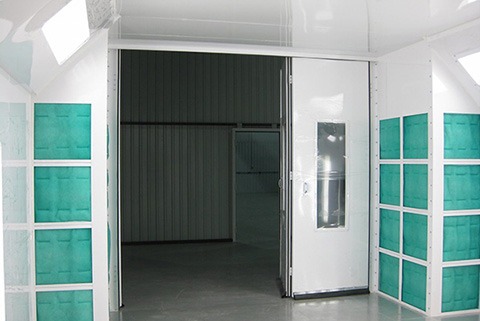
- Ventilated booths and enclosures: Fixed enclosures that surround the operation and draw fume away from the welder.
- Portable fume extractors: Mobile filter units with a hose and hood, used where welding locations change.
Source Capture vs. General Ventilation
General (dilution) ventilation, such as roof fans, open doors, or high-volume air handling, works by mixing contaminated air with clean air until concentrations drop. The problem is that fume passes through the welder’s breathing zone before it is diluted.
The research is consistent on this point. In an analysis of three large welding exposure datasets, Susi and Flynn (2010) found evidence that local exhaust ventilation can control manganese and total fume exposures, but that general mechanical ventilation may not. They also found that higher exposures were associated with a greater degree of enclosure, particularly when local exhaust was absent.
A 1998 NIOSH field evaluation of welding controls across seven sites illustrates how much placement matters. The ventilated controls ranged from completely ineffective (a canopy hood system) to reducing fume exposure by up to 83% (a fume extraction gun system). Overhead canopy hoods pull the plume upward, which is precisely the path that carries it past the welder’s face.
In 2019, the UK Health and Safety Executive reached the same conclusion at a regulatory level. Safety alert STSU1-2019 states that general ventilation does not achieve the necessary control of welding fume and that suitable engineering controls, typically local exhaust ventilation, are expected for all indoor welding, regardless of duration.
What Do OSHA Regulations Say About Source Capture?
OSHA does not mandate a single type of equipment for every welding task. However, several standards require local exhaust in specific situations, define how it must perform, and establish engineering controls as the first line of defense ahead of respirators.
29 CFR 1910.252(c) — Welding, Cutting, and Brazing: Health Protection and Ventilation
This is the primary general industry standard for welding ventilation.
- 1910.252(c)(1)(iii): Local exhaust or general ventilating systems must be provided and arranged to keep toxic fumes, gases, or dusts below the maximum allowable concentrations specified in 29 CFR 1910.1000.
- 1910.252(c)(2): Mechanical ventilation is required when welding in a space of less than 10,000 cubic feet per welder, in a room with a ceiling height of less than 16 feet, or in confined spaces or areas where partitions, balconies, or other structural barriers significantly obstruct cross ventilation. It must provide at least 2,000 cubic feet per minute per welder, except where local exhaust hoods and booths or approved airline respirators are provided.
- 1910.252(c)(3): Defines acceptable local exhaust. Freely movable hoods must be placed by the welder as near as practicable to the work and maintain a velocity toward the hood of 100 linear feet per minute in the zone of welding when the hood is at its most remote distance from the weld. Fixed enclosures must have a top and at least two sides and maintain at least 100 linear feet per minute away from the welder.
- 1910.252(c)(5)–(c)(12): Set additional requirements for materials of toxic significance, including fluorine compounds, zinc, lead, beryllium, cadmium, mercury, cleaning compounds, and stainless steel. For zinc- and lead-bearing materials welded indoors, these provisions call for local exhaust ventilation under (c)(3).
The airflow table in 1910.252(c)(3) shows why “as near as practicable” is the most important phrase in the standard:
| Hood distance from arc or torch | Minimum airflow (cfm) | Duct diameter (in.) |
|---|---|---|
| 4 to 6 inches | 150 | 3 |
| 6 to 8 inches | 275 | 3½ |
| 8 to 10 inches | 425 | 4½ |
| 10 to 12 inches | 600 | 5½ |
Moving a hood from 4–6 inches to 10–12 inches from the arc requires four times the airflow to achieve the same capture. Proximity, not fan size alone, determines performance.
29 CFR 1910.134(a)(1) — Respiratory Protection
The respiratory protection standard establishes OSHA’s hierarchy of controls. It states that the primary objective is to prevent atmospheric contamination, which must be accomplished as far as feasible by accepted engineering control measures, explicitly including general and local ventilation. Respirators are to be used when effective engineering controls are not feasible or while they are being instituted. In other words, a respirator program alone is not OSHA’s intended compliance strategy for welding fume.
29 CFR 1910.1026 — Chromium (VI)
Welding stainless steel and other chromium-bearing alloys converts chromium to its hexavalent form, a known carcinogen. OSHA’s hexavalent chromium standard sets a permissible exposure limit (PEL) of 5 µg/m³ and an action level of 2.5 µg/m³ as 8-hour time-weighted averages. Employers must use engineering and work practice controls to reduce and maintain exposures at or below the PEL unless they can demonstrate those controls are not feasible. Parallel standards apply to shipyards (29 CFR 1915.1026) and construction (29 CFR 1926.1126).
29 CFR 1910.1000 — Air Contaminants (Manganese)
Manganese, present in most steel welding fume, carries an OSHA PEL of 5 mg/m³ as a ceiling limit. This limit dates to 1971. More recent recommendations are considerably lower: NIOSH recommends 1 mg/m³ (8-hour TWA), and the ACGIH Threshold Limit Value is 0.02 mg/m³ for the respirable fraction and 0.1 mg/m³ for the inhalable fraction. Many manufacturers voluntarily manage to the ACGIH values, which are difficult to achieve without effective source capture.
29 CFR 1926.353 — Construction
For construction work, mechanical ventilation must consist of either general mechanical ventilation or local exhaust systems. Local exhaust must consist of freely movable hoods placed by the welder as close as practicable to the work, with sufficient capacity to remove fumes and smoke at the source and keep breathing zone concentrations within safe limits. Welding in confined spaces, or on metals of toxic significance in enclosed spaces, requires mechanical ventilation.
General Duty Clause
Where no specific standard applies, Section 5(a)(1) of the Occupational Safety and Health Act requires employers to provide a workplace free from recognized hazards likely to cause death or serious physical harm. Welding fume’s classification as a human carcinogen strengthens its status as a recognized hazard.
Benefits of Source Capture for Welders
Reduced Lung Cancer Risk
In 2017, an IARC working group reclassified welding fume from “possibly carcinogenic” (Group 2B, assigned in 1989) to carcinogenic to humans (Group 1), published in IARC Monograph Volume 118. IARC found sufficient evidence that welding fume causes lung cancer and observed positive associations with kidney cancer. The classification applies to all welding fume, including mild steel.
A meta-analysis by the IARC working group (Honaryar et al., 2019, Occupational and Environmental Medicine) quantified the risk across 45 studies. Compared with never having welded or been exposed to welding fume, the meta-relative risk of lung cancer was:
- 1.29 (95% CI 1.20–1.39) across 22 cohort studies
- 1.87 (95% CI 1.53–2.29) across 15 case-control studies
- 1.17 (95% CI 1.04–1.38) across 8 case-control studies adjusted for both smoking and asbestos exposure
The authors concluded that welding fume increases lung cancer risk regardless of the type of steel welded, the welding method, and independent of asbestos exposure or smoking.
Lower Manganese Exposure and Neurological Risk
Chronic manganese exposure is associated with parkinsonism, a set of symptoms including slowed movement, rigidity, and impaired speech. In a longitudinal study of 886 welding-exposed workers, Racette et al. (2017, Neurology) found that parkinsonism progressed faster with greater cumulative manganese exposure. According to the study’s senior author, neurological signs appeared at an estimated exposure of 0.14 mg/m³, well below OSHA’s 5 mg/m³ limit.
Source capture directly reduces this exposure. The largest pooled analysis to date (Liu, Hammond and Rappaport, 2011, Annals of Occupational Hygiene) compiled 2,065 total particulate and 697 manganese measurements and found:
- Manganese exposure was 67% lower when local exhaust ventilation was present.
- Total particulate exposure was 43% lower with local exhaust ventilation.
- Manganese exposure was 750% higher in enclosed spaces.
A controlled study of portable local exhaust during carbon steel pipe welding (Meeker, Susi and Flynn, 2007, Journal of Occupational and Environmental Hygiene) measured a 75% reduction in manganese exposure and a 60% reduction in total particulate in experimental trials, and a 53% reduction in manganese under full-shift field conditions.
Protection That Does Not Depend on Fit
A respirator protects only the person wearing it, and only when it fits, is maintained, and is worn correctly. Source capture removes the contaminant from the air itself, so protection does not depend on a facial seal, fit testing, or consistent use of personal equipment throughout a shift.
Better Visibility at the Arc
Removing the plume as it forms keeps smoke out of the welder’s line of sight, making it easier to see and control the weld puddle.
Benefits of Source Capture for the Shop as a Whole
Protection for Non-Welding Employees
Fume that escapes the welding area exposes fitters, material handlers, supervisors, and office staff who have no welding PPE. Capturing fume at the arc keeps it from accumulating in shared air. OSHA’s construction standard reflects this principle: under 29 CFR 1926.353(c)(4), other employees exposed to the same atmosphere as welders working on toxic metals must be protected in the same manner as the welder.
Simpler, Less Costly Compliance
Exposure levels drive compliance obligations. Under the hexavalent chromium standard, exposures at or above the action level trigger periodic air monitoring, and exposures above the PEL trigger regulated areas. Where respirators are required, 29 CFR 1910.134 requires a written program, medical evaluations, and fit testing, provided at no cost to employees. Engineering controls that keep exposures low can reduce or eliminate many of these recurring administrative costs, which apply year after year, per worker.
Cleaner Facility and Equipment
Fume that is not captured eventually settles on equipment, lighting, structural steel, electrical cabinets, and finished parts. Capturing it at the source reduces this buildup and the housekeeping it requires.
More Efficient Use of Air
Dilution ventilation must move large volumes of air through the entire building, and every cubic foot exhausted must be replaced with make-up air that is often heated or cooled. Because source capture targets a small volume of air at the arc, the same level of control can typically be achieved while moving less air through the building. Actual energy impact depends on system design, climate, and whether filtered air is exhausted or recirculated, and should be evaluated by a qualified ventilation professional.
Stronger Recruitment and Retention
Skilled welders are in demand, and visible, functioning fume control signals a workplace that takes health seriously.
What Makes a Source Capture System Effective?
Source capture is only as effective as its use. A 2012 literature review by Flynn and Susi (Annals of Occupational Hygiene) found that field studies suggest exposure reductions of 40–50% or more with portable or fixed local exhaust compared with natural ventilation, but that correct hood positioning and adequate exhaust flow rates are essential. The same review confirmed that extraction guns have been successfully used for GMAW and flux-cored welding, with a workable balance between extraction airflow and shielding gas coverage.
Best practices include:
- Keep the hood close. Position the hood or nozzle as near the arc as practicable and reposition it as the weld progresses. OSHA’s own fact sheet advises keeping fume hoods, extraction guns, and vacuum nozzles close to the plume source.
- Keep your head out of the plume. Body position remains an important work practice even with extraction in place.
- Match the equipment to the work. Extraction guns suit high-production wire welding; arms and hoods suit varied fixture work; downdraft and backdraft tables suit bench work on small parts.
- Verify airflow. Measure capture velocity at the working distance and confirm it meets the 100 fpm benchmark in 29 CFR 1910.252(c)(3).
- Maintain filters. Loaded filters reduce airflow and capture performance. Follow the manufacturer’s maintenance schedule.
- Confirm with air sampling. Personal breathing zone sampling by a qualified industrial hygienist is the only way to verify that exposures are below applicable limits.
- Treat respirators as a supplement. Where engineering controls cannot reduce exposures below the limits on their own, provide respiratory protection under a compliant 1910.134 program.
Frequently Asked Questions
What is source capture in welding?
Source capture is a form of local exhaust ventilation that collects welding fume and gases at or very near the arc, before they rise into the welder’s breathing zone or spread through the shop. Common devices include fume extraction guns, extraction arms and hoods, downdraft and backdraft tables, and ventilated booths.
Does OSHA require source capture for welding?
OSHA does not mandate one specific device for all welding, but several standards require or strongly favor it. 29 CFR 1910.252(c) requires ventilation sufficient to keep fume below exposure limits, sets a 100 ft/min capture velocity for movable hoods, and calls for local exhaust when welding zinc- or lead-bearing materials indoors. 29 CFR 1910.134(a)(1) and 29 CFR 1910.1026 require feasible engineering controls before relying on respirators.
How much does local exhaust ventilation reduce welding fume exposure?
In a pooled analysis of more than 2,000 welding exposure measurements, manganese exposure was 67% lower and total particulate exposure was 43% lower when local exhaust ventilation was present. A 2012 literature review found field reductions of 40–50% or more compared with natural ventilation when hoods are positioned correctly and airflow is adequate.
Is general shop ventilation enough to control welding fume?
Often not. Research has found that local exhaust ventilation can control manganese and total fume exposures while general mechanical ventilation may not. The UK Health and Safety Executive concluded in 2019 that general ventilation does not achieve adequate control and now expects local exhaust for all indoor welding.
How close does a fume extraction hood need to be to the weld?
As close as practicable. A movable hood must maintain at least 100 linear feet per minute toward the hood in the welding zone. Per OSHA’s table, a hood 4–6 inches from the arc needs 150 cfm, while a hood 10–12 inches away needs 600 cfm.
Is welding fume a carcinogen?
Yes. IARC classifies welding fume as carcinogenic to humans (Group 1), based on sufficient evidence that it causes lung cancer. The classification applies to all welding fume, including mild steel.
The Bottom Line
Welding fume is a recognized human carcinogen and a source of neurotoxic manganese, and the evidence shows that diluting it across a building is not a reliable way to protect the people breathing it. Source capture removes fume where it is created. It is the control OSHA’s hierarchy points to first, the approach peer-reviewed field research supports, and the most direct way to protect both welders and everyone who works around them.
References
- U.S. Occupational Safety and Health Administration. 29 CFR 1910.252 — Welding, Cutting, and Brazing: General Requirements.
- U.S. Occupational Safety and Health Administration. 29 CFR 1910.134 — Respiratory Protection.
- U.S. Occupational Safety and Health Administration. 29 CFR 1910.1026 — Chromium (VI).
- U.S. Occupational Safety and Health Administration. 29 CFR 1926.353 — Ventilation and Protection in Welding, Cutting, and Heating.
- U.S. Occupational Safety and Health Administration. Occupational Chemical Database: Manganese, Compounds & Fume (as Mn).
- U.S. Occupational Safety and Health Administration. Controlling Hazardous Fume and Gases during Welding. Fact Sheet FS-3647, 2013.
- National Institute for Occupational Safety and Health. Welding and Manganese.
- International Agency for Research on Cancer. IARC Monographs Volume 118: Welding, Molybdenum Trioxide, and Indium Tin Oxide. Lyon: IARC; 2018.
- Honaryar MK, Lunn RM, Luce D, et al. Welding fumes and lung cancer: a meta-analysis of case-control and cohort studies. Occup Environ Med. 2019;76(6):422–431.
- Liu S, Hammond SK, Rappaport SM. Statistical modeling to determine sources of variability in exposures to welding fumes. Ann Occup Hyg. 2011.
- Meeker JD, Susi P, Flynn MR. Manganese and welding fume exposure and control in construction. J Occup Environ Hyg. 2007;4(12):943–951.
- Susi P, Flynn MR. Manganese, iron, and total particulate exposures to welders. J Occup Environ Hyg. 2010;7(2):115–126.
- Flynn MR, Susi P. Local exhaust ventilation for the control of welding fumes in the construction industry — a literature review. Ann Occup Hyg. 2012;56(7):764–776.
- Wallace M. Evaluation of controls used to reduce welding fume exposures. NIOSH; 1998.
- Racette BA, Nielsen SS, Criswell SR, et al. Dose-dependent progression of parkinsonism in manganese-exposed welders. Neurology. 2017;88(4):344–351.
- Health and Safety Executive (UK). Change in Enforcement Expectations for Mild Steel Welding Fume. Safety Alert STSU1-2019.

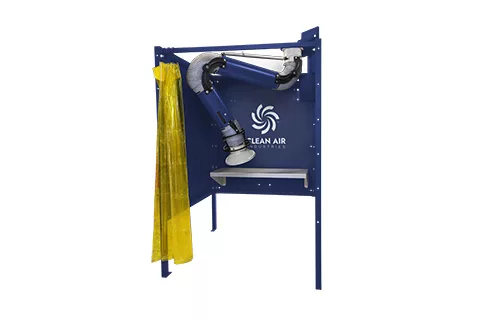 Welding booths play a crucial role in schools by providing students with a safe and controlled environment to learn the art of welding. They not only develop students’ technical skills but also foster creativity, innovation, and problem-solving abilities. Welding booths create a hands-on learning experience that bridges the gap between classroom theory and real-world application, preparing students for successful careers in welding.