
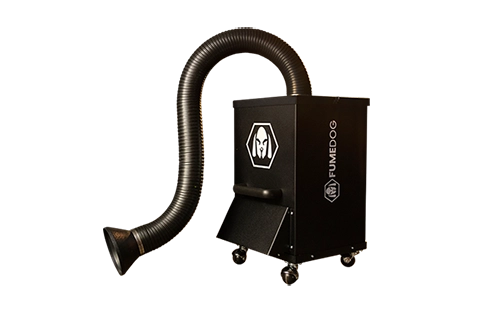
Portable fume extractors are built to capture weld fumes, smoke, and airborne particles right at the source, before they reach your team’s breathing zone.
With durable extraction arms and high-efficiency filtration, they help create a cleaner, safer work environment while supporting compliance with OSHA exposure limits. Their self-contained, mobile design makes it easy to move protection wherever welding or fabrication is taking place. The result is a practical, energy-efficient solution that improves air quality and workplace safety – without the cost or complexity of permanent ductwork.
Suitcase fume extractor designed for spot welding and soldering. Only 30 lbs for easy mobility. Featuring 350 CFM of airflow.
Product Details
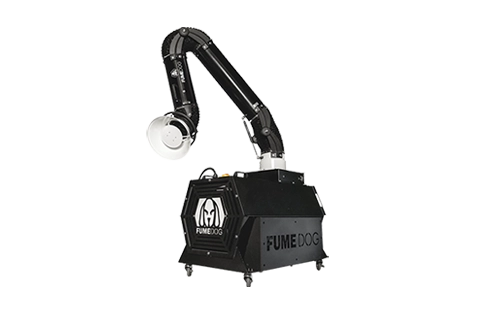
Delivers 1,200 CFM of high-performance extraction for Stick, MIG, and TIG welding, built for 1–2 shifts per day with an integrated filter cleaning system.
Product Details
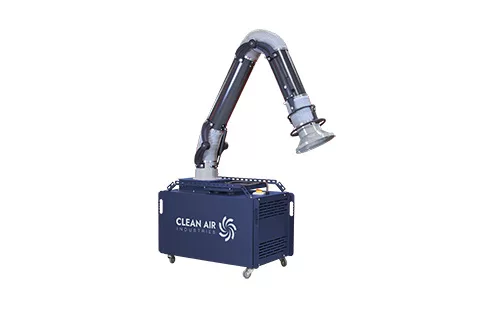
A rugged, time-tested workhorse. The predecessor to the Fume Dog featuring a classic form factor. It’s got one thing the Fume Dog doesn’t: built-in cup holders.
Product DetailsPlease provide the information below, and one of our experts will be in touch very shortly to help with your needs.
In many cases, yes – if the system is properly selected and used correctly.
Occupational Safety and Health Administration (OSHA) sets permissible exposure limits (PELs) for welding fumes and specific metals such as manganese and hexavalent chromium. Portable fume extractors support compliance by capturing contaminants at the source, before they disperse into the breathing zone.
That said, compliance depends on:
1. Adequate airflow at the arc
2. Proper hood placement (typically within 6–12 inches)
3. Correct filtration (HEPA when required)
4. Routine maintenance and exposure monitoring
Portable fume extractors are ideal when flexibility matters.
They’re commonly used for:
• Individual welding stations
• Maintenance departments
• Job shops
• Temporary or changing layouts
• Construction or field work
Advantages include:
• Lower upfront investment
• No ductwork installation
• Easy relocation between work areas
• Quick deployment
However, in high-production environments with multiple welders running continuously, a centralized system may provide better long-term airflow consistency and lower operating cost per station.
Portable fume extractors are relatively low maintenance — but they are not maintenance-free.
Typical upkeep includes:
• Inspecting filters weekly or monthly (depending on usage)
• Replacing or cleaning filters as needed
• Inspecting hoses or fume arms for leaks or damage
• Verifying airflow performance
Routine maintenance directly impacts capture efficiency, energy consumption, and motor life.
CFM stands for cubic feet per minute. It measures how much air the system moves. In fume extraction, CFM determines how effectively fumes are captured before they spread.
For portable welding fume extractors, acceptable airflow ranges typically fall between:
• 300–900 CFM for light-duty or intermittent welding
• 900–1,100 CFM for moderate fabrication work
• 1,100+ CFM for heavier smoke generation or higher duty cycles
Keep in mind:
• The hood must be positioned close to the arc (6–12 inches)
• Higher CFM is not always better — oversizing increases energy use
• Undersizing reduces capture efficiency and can impact compliance
The goal is balanced performance: enough airflow to capture fumes effectively without unnecessary operating cost.
When sized correctly, portable fume extraction systems can reduce overall operating expenses by:
• Avoiding ductwork installation costs
• Reducing facility modifications
• Lowering capital investment compared to full central systems
• Providing energy savings when only specific stations are active